



Brèves
Grâce à son bec, l’Ibis hagedash profite de la progression des surfaces irriguées en Afrique du Sud
Des expériences menées sur des oiseaux captifs ont en effet permis de vérifier que cette espèce détectait plus facilement les proies dans les sols humides.
28/05/2024 |
Non soumis au comité de lecture
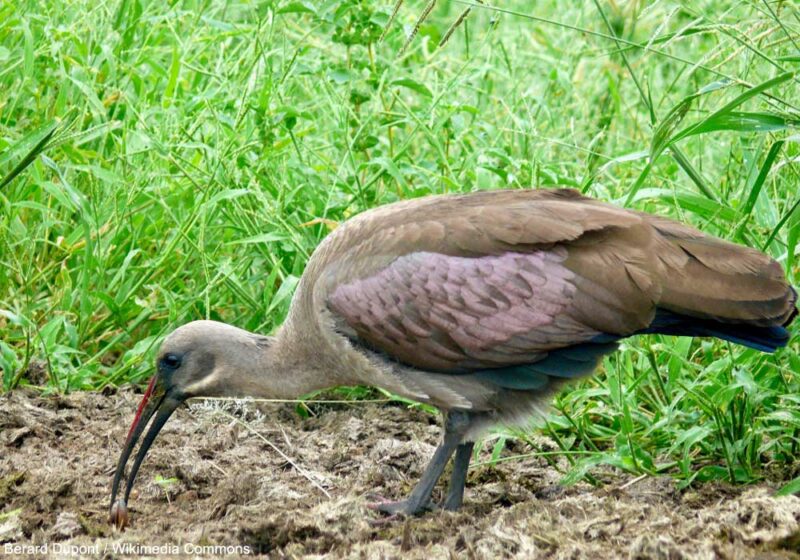
Ibis hagedash (Bostrychia hagedash) se nourrissant dans le parc national Kruger (Afrique du Sud).
Photographie : Bernard Dupont / Wikimedia Commons
Vous devez vous connecter pour consulter cet article
Se connecter
Poursuivez la lecture de cet article, en vous abonnant dès maintenant !
Découvrez les Archives d’Ornithomedia.com
Pour seulement 10,00 €TTC/an (ou 6,00 € les 6 mois)
Profitez de plusieurs centaines d’articles en accès illimité et sans aucun engagement.
Compléments
Ouvrages recommandés
- Birds of the Horn of Africa: Ethiopia, Eritrea, Djibouti, Somalia and Socotra de Terry Stevenson, John Fanshawe et Brian Small
- Sasol eBirds of Southern Africa de Cool Ideas LLC
- Birds of Africa South of the Sahara: A Comprehensive Illustrated Field Guide de Ian Sinclair et Peter Ryan
Sources
- Carla J. du Toit, Anusuya Chinsamy et Susan J. Cunningham (2024). Good vibrations: remote-tactile foraging success of wading birds is positively affected by the water content of substrates they forage in. Journal of Avian Biology. Date : 15/04. nsojournals.onlinelibrary.wiley.com
- Velisile Bukula (2024). African alarm clocks: Hadeda ibises’ sixth sense key to range expansion – UCT study reveals. University of Cape Town. Date : 17/04. www.news.uct.ac.za

Aucun commentaire sur ce sujet
Participer à la discussion !